4 min to read
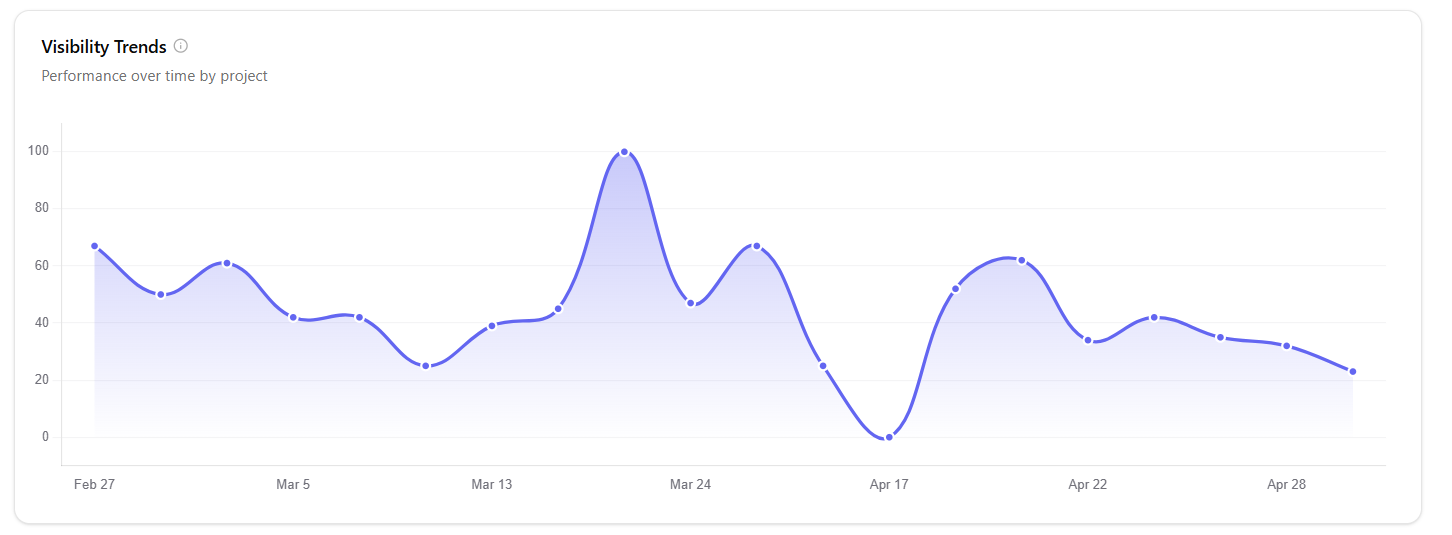
I remember the exact moment I realized SEO was fundamentally broken. It was January 2026, and one of our longest-standing clients—a B2B SaaS company generating 40% of their revenue from organic search—called with panic in their voice. Their website traffic had plummeted 35% in three weeks, but Google rankings hadn't moved an inch.
The problem wasn't their SEO. The problem was that their customers weren't using Google anymore. They were using ChatGPT. Perplexity. Google's new AI Overviews. And none of these systems were sending traffic to our client's website.
That conversation sparked a complete reimagining of how we approach digital marketing at Codedesign. And it's why I'm writing this to you today: if you're still optimizing primarily for traditional SEO in 2026, you're already competing with yesterday's rulebook.
The Seismic Shift: From Rankings to AI Citations
Let's start with the numbers, because they're compelling:
Perplexity just crossed 15 million daily active users. ChatGPT processes over 100 million search-like queries every day. Google's AI Overviews appear in more than 50% of all searches, with the highest prevalence in informational, how-to, and comparison queries—the exact categories most B2B and B2C companies rely on for organic discovery.
This isn't a trend. This is the new normal.
And here's what matters most: when these AI systems generate answers, they're not sending you traffic through rankings. They're citing 2-7 domains per response. That's it. If you're not one of those 2-7 sources, you're invisible.
This is what marketers now call Generative Engine Optimization, or GEO. And unlike SEO, which took years to master, GEO is a discipline you can implement right now while most of your competitors are still obsessing over keyword rankings.
GEO vs. SEO: The Three Critical Differences

Traditional SEO optimizes for: rankings, keywords, backlinks, and page authority. It's a game where you're competing for position in the top 10 results—and as traffic gets thinner in positions 11+, you're fighting tooth and nail for that coveted spot #1.
GEO optimizes for something entirely different: being cited by AI systems as a credible source. And the criteria are not the same.
Here are the three shifts you need to make right now:
1. From Keyword Targeting to Topical Authority
AI models evaluate the entire body of your work in a domain. If you write one great article about "cloud security," Google's ranking algorithm might reward you. An AI model? It wants to see depth: 10 articles. 20 articles. Thought leadership. Authority.
2. From Audience Segmentation to Credibility Signals
In SEO, you're building elaborate audience profiles and testing which demographics convert. In GEO, you're asking: will an AI model trust this source? That requires consistent, well-cited, well-supported content. It requires your brand showing up across multiple trusted platforms—your website, yes, but also LinkedIn, Reddit, industry publications, and review platforms.
3. From Click-Through Rate to Citation Frequency
The metric that mattered for 20 years was CTR—how many people clicked your link in the SERPs. With GEO, the metric that matters is: how often does this AI system cite you? How many different AI platforms mention you? How prominently does your brand appear in AI-generated responses?
The Real-World Impact: A Case Study
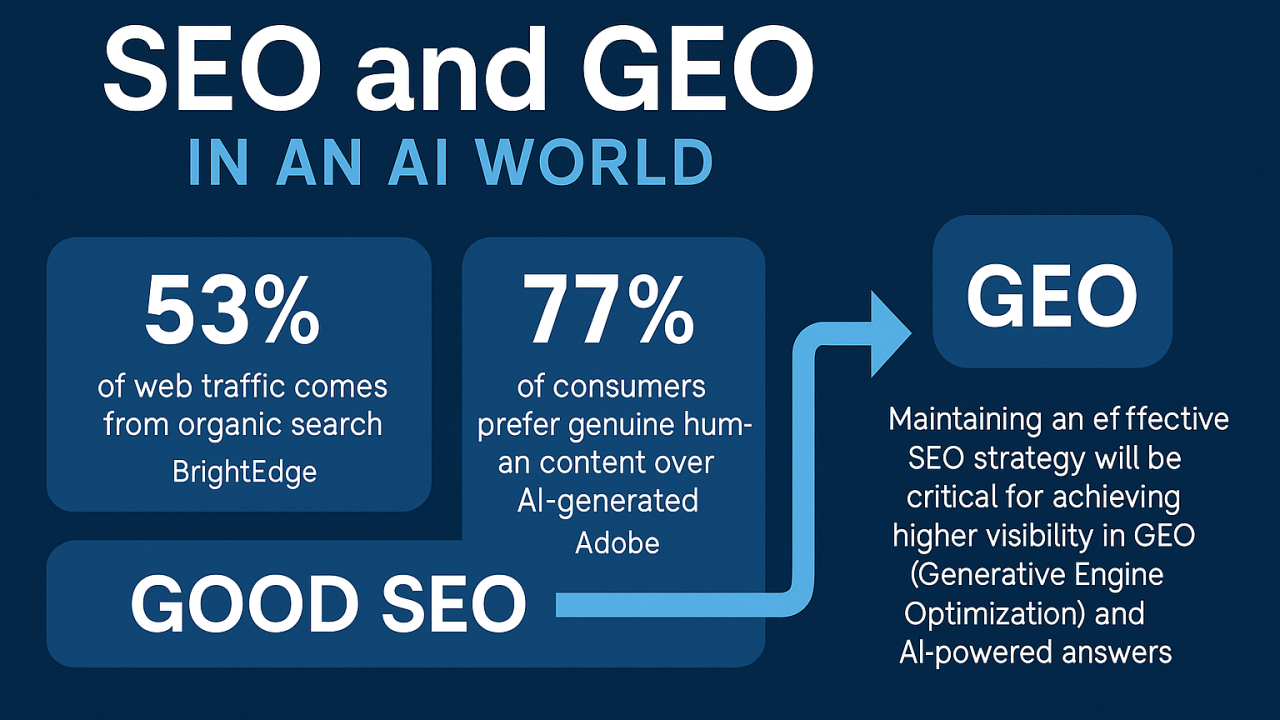
I mentioned our SaaS client earlier. After we realized their SEO wasn't the problem, we pivoted their strategy completely. We doubled down on three things:
1. Content comprehensiveness: Their foundational articles became 4,000-6,000 word deep dives instead of 1,500-word keyword-focused pieces. We structured them to address the exact way AI systems parse information: clear definitions, multiple perspectives, industry examples, and cited sources.
2. Distributed credibility: We published original research on LinkedIn. We contributed expert commentary to Reddit discussions. We were featured in industry publications. Our client's brand signals multiplied across the web.
3. AI platform optimization: We specifically structured content for Perplexity (which loves detailed, cited sources), ChatGPT (which values comprehensive guides), and Google's AI Overviews (which pulls from ranked content but with new criteria).
The result: Within 90 days, they appeared in AI-generated responses for 23 different high-intent queries. Their brand went from invisible to cited. And traffic? It stabilized, then grew—not because Google rankings improved, but because qualified prospects were now finding them through AI systems.
The Window to Get Ahead Is Still Open
[Image: Competitive Advantage Visualization - place here]
Here's what I see happening in the market right now: most brands are still operating in SEO mode. They're optimizing for Google's ranking algorithm. They're chasing keywords. They're building backlinks. Meanwhile, the frontier has shifted.
But this isn't a binary choice. You don't abandon SEO. You expand your thinking. You ask: how do I position my brand to be cited by AI systems? How do I demonstrate credibility across the platforms where these models go to find information?
The brands winning in 2026 are the ones doing both. And if you start now, before GEO becomes table stakes in your industry, you'll have a genuine competitive advantage.
What This Means for You Right Now

If you're a marketing director or business owner reading this, here are three immediate actions you can take:
Audit your content comprehensiveness: Is your best content 1,500 words or 5,000? AI systems prefer depth. Start expanding your flagship content now.
Map your AI platform presence: Try searching your industry keywords on Perplexity, ChatGPT, and Google's AI Overviews. Are you being cited? If not, that's your new north star metric.
Build distributed credibility: Where does your audience hang out? Reddit? LinkedIn? Industry forums? Start building a presence there as an authority, not just as a company.
The shift from SEO to GEO is happening right now, whether you're ready or not. The organizations that recognize this shift and act on it quickly will capture disproportionate share of AI-driven discovery. The ones that keep optimizing for yesterday's algorithms will find themselves increasingly invisible.
I've spent the last four months rebuilding how Codedesign approaches search strategy. We're now helping our clients do the same. And if you're feeling like something fundamental has shifted in digital marketing—you're right. It has.
Want to explore how GEO fits into your marketing strategy?
I publish weekly insights about the future of digital marketing on Voice of Experts, and we dive deep into GEO strategy, AI-driven marketing, and real-world case studies there.
Or reach out directly—I'd love to hear what search trends you're seeing in your industry. What's working? What's breaking? Connect with me or drop a comment below.
Question for you: Are you seeing AI-driven search in your analytics yet? And if so, how is it changing your organic strategy? I'd love to hear your experience in the comments.
About Bruno Gavino
Bruno Gavino is founder and CEO of Codedesign, a digital marketing strategy firm specializing in AI-driven marketing, performance analytics, and organic search strategy for B2B and B2C companies. He writes about digital marketing strategy, AI, and growth at the intersection of technology and business impact.
