6 min to read
A few weeks ago, one of our clients — a well-established B2B software company we've been working with for almost two years — asked me a question that stopped me cold: "Bruno, how come when I ask ChatGPT who the best platforms are in our category, we don't show up at all? Our competitors do. We don't."
I didn't have a great answer in that moment. But I spent the next three days digging in, and what I found changed how I think about our entire content strategy at Codedesign. And honestly, it's changed how I think about SEO as a discipline altogether.
We are living through one of the most significant shifts in how people discover brands online — and most businesses are completely unprepared for it. Gartner projects that organic search traffic to commercial websites will decline 25% by 2026 as consumers shift discovery to AI tools like ChatGPT, Perplexity, Gemini, and Copilot. That's not a trend. That's a structural collapse of the old playbook.
The good news? There's a new playbook. It's called Generative Engine Optimization — GEO — and if you move on it in the next 30 to 90 days, you have a real first-mover advantage. Let me walk you through what I've learned.
The Wake-Up Call I Didn't See Coming

I'll be honest — I was one of those people who kept saying "AI search is coming, but it's not here yet." I read the Gartner reports. I watched the Rand Fishkin analysis on SparkToro. We all saw the BrightEdge research showing that AI Overviews were appearing in over 30% of search queries. But I kept treating it as something on the horizon.
Then I started actually testing. I opened ChatGPT, Perplexity, and Gemini, and I typed the kinds of questions our clients' potential customers would ask.
Not brand searches — intent searches. "What's the best tool for X?" "Which agencies specialize in Y?" "How do I solve Z?" And I started tracking which brands came up and which didn't.
The pattern was alarming. Companies with strong traditional SEO footprints weren't necessarily winning in AI results. Companies that had structured their content around specific questions, had earned mentions from trusted third-party sources, and had built clear topical authority — those were the ones getting cited. It wasn't about domain authority in the old sense. It was about something different: credibility signals that AI models could actually parse and trust.
I came across academic research from Princeton and Georgia Tech — one of the foundational GEO studies — that found content optimised for entity clarity and contextual structure was cited up to 58% more often in AI-generated summaries. That number stayed with me. 58%. That's not marginal. That's decisive.
What GEO Actually Is (And Why It's Different From SEO)
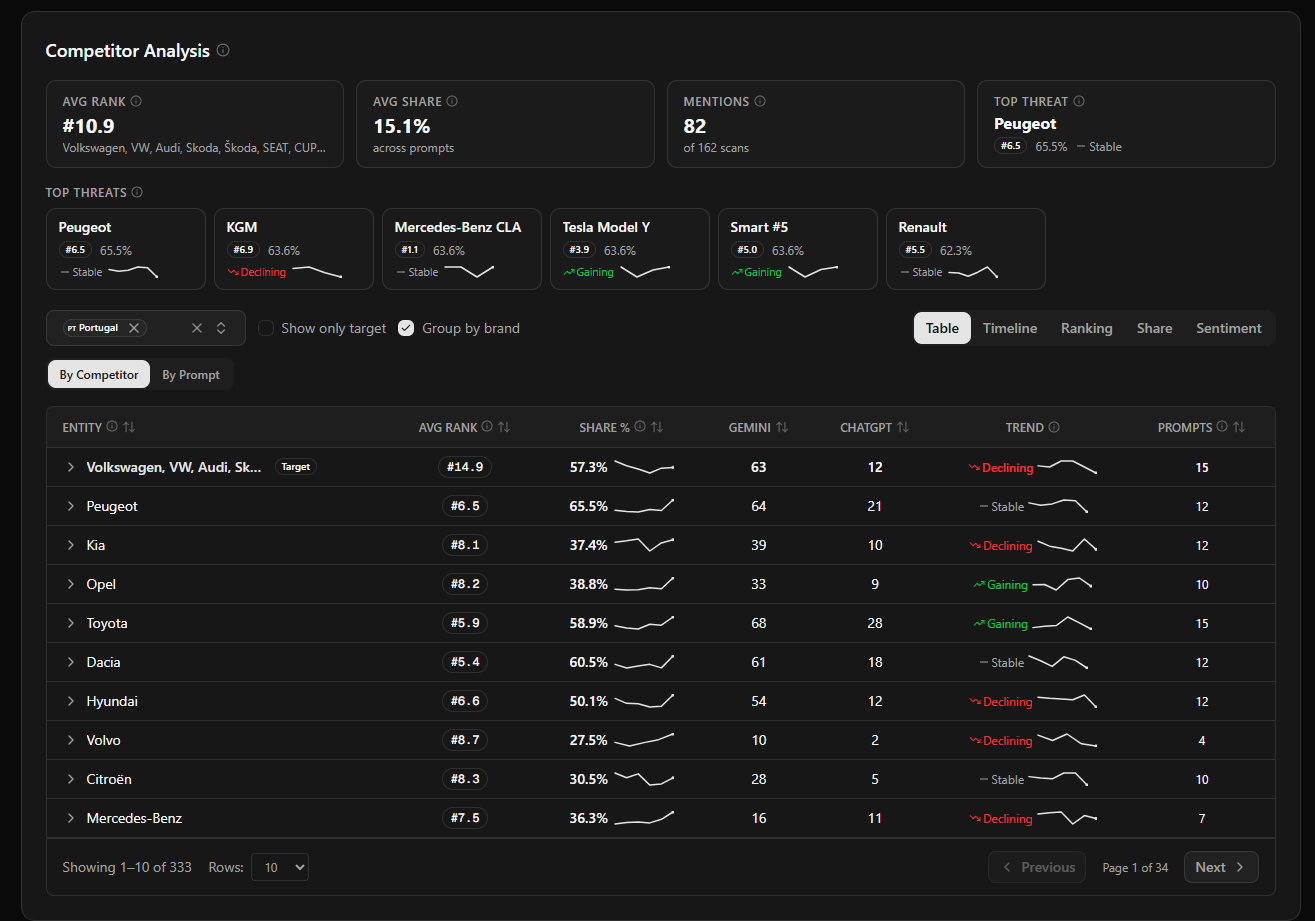
Let me be clear about something, because there's a lot of confusion in the market right now. GEO is not a replacement for SEO. It's an evolution of it — but the mental model is genuinely different.
Traditional SEO was built around keywords and links. You optimised pages to rank for search queries, and the goal was to get clicked. The user would see your page title, click through, and then you'd try to convert them on your site.
GEO is built around answers. AI systems like ChatGPT and Perplexity don't just rank pages — they synthesize information and generate a response. The question is: are you in that synthesis? Are you being cited? Are you part of the answer, or are you invisible?
The technical requirements are also meaningfully different. GEO requires what researchers call "entity-centric" content — content structured around clearly defined concepts and entities, not just keyword strings. It requires structured data (FAQ schema, HowTo schema, Speakable schema) so AI can extract answers cleanly. It requires concise answer blocks — research shows that passages under 40 words are extracted at 2.7x the rate of longer ones. And it requires multi-source corroboration: your brand and expertise need to be mentioned across trusted third-party sources, not just your own site.
One thing I keep reminding clients is that so much of what makes for great SEO foundation — E-E-A-T, content depth, technical hygiene — is also the foundation for GEO. The disciplines are complementary, not competing. If your SEO fundamentals are strong, you're already ahead of most of the market on GEO readiness.
A Client Story That Changed How I Think About Content
Back to that client I mentioned at the start. After my three days of research, we ran a full GEO audit on their digital presence. What we found was instructive.
Their website had good SEO fundamentals — solid domain authority, clean technical architecture, reasonable keyword rankings. But their content was written in a very traditional way: long-form articles built around keyword clusters, lots of general information, almost no structured FAQ content, and very little that would read clearly to an AI model trying to extract a direct answer.
More importantly, when we looked at their third-party presence — the publications, forums, directories, and community sites where their brand was mentioned — there was almost nothing. They were essentially invisible to the web of signals that AI systems use to establish credibility.
We restructured four of their core pillar pages using entity-first content architecture, added FAQ schema with question sets matched to actual AI prompts we'd identified, and launched a targeted digital PR campaign to earn mentions in three industry publications. Within 60 days, they went from zero AI mentions to appearing in Perplexity results for six of their target queries. Not ranked — cited. That's a fundamentally different kind of visibility, and it's the kind that will compound as AI search continues to grow.
Five GEO Tactics That Are Delivering Results Right Now
Based on what we're testing across our client portfolio and what the research supports, here are the five moves I'd prioritise right now:
1. Question-first content restructuring. Go through your most important pages and rewrite them to explicitly answer the questions your audience is typing into AI tools. Use AnswerThePublic or Perplexity itself to find those questions. Then answer them cleanly and early — don't bury the answer in paragraph seven.
2. FAQ schema deployment. Add FAQ structured data to your key service and product pages. Match the questions to real AI prompts. Research shows FAQ schema drives citation rates 3x higher than unstructured content. This is one of the highest-ROI technical changes you can make right now.
3. Concise answer blocks. For every key concept you want to own, write a 30-40 word answer that a human or AI can extract cleanly. Think of it as your "GEO snippet" — the answer-first paragraph you want AI to pull. Then expand below it for depth.
4. Earned media and third-party mentions. This is the piece most brands overlook. AI models need corroboration — your brand mentioned on industry publications, podcasts, forums, and directories. A focused digital PR effort targeting 3-5 relevant publications is worth more for GEO than almost any on-site content work.
5. Monitoring and iteration. The CMU research on GEO found that optimal strategies shift every 60-90 days as AI models are retrained. You need to actively track your brand's presence in AI-generated answers — not just Google rankings. Tools like Brandlight or AthenaHQ can help with this measurement.
Your 30-Day GEO Action Plan

Here's what I'd focus on in the next 30 days if you're starting from scratch:
- Week 1 — Audit your current AI visibility. Open ChatGPT, Perplexity, and Gemini. Run 20 queries that represent your most important business categories. Note who gets cited and who doesn't. This gives you your baseline and your competitive intelligence in one exercise.
- Week 2 — Identify your top answer opportunities. These are the questions your audience asks that you should own, but currently don't appear in AI results for. Prioritise based on commercial intent — the questions that, if answered, would move people toward a purchase decision.
- Week 3 — Restructure your content. Take your top 3 pages and rewrite them using entity-first, question-first structure. Add FAQ schema. Write your concise answer blocks. Don't try to do everything at once — go deep on three pages before going wide.
- Week 4 — Launch your earned media outreach. Identify 5 publications, communities, or platforms where your target audience consumes content. Reach out with a data point, a case study, or an expert quote. You're not selling — you're contributing. AI models notice the difference.
None of this is magic. It's structured, systematic work — the same kind we've been doing for clients at Codedesign for years, just applied to a new and rapidly evolving channel. The brands that move now will have a compounding advantage. The ones that wait until AI search is "mainstream" will be playing catch-up the same way slow adopters did with mobile a decade ago.
So let me leave you with a question: if someone opened ChatGPT right now and asked for the best solution to the problem your business solves, would your name come up?
If the honest answer is "probably not" — let's talk. Reach out via to Codedesign AI team and let's do a GEO audit together. This is exactly the kind of challenge I find most interesting right now, and I genuinely believe the next 90 days represent a window that won't stay open forever.

Add comment ×