3 min to read
In my recent conversation with Michael Morris, a founding partner of SEArch+ (Space Exploration Architecture) and U Morris Studio, we explored the fascinating intersection of high-stakes space architecture and the evolving landscape of digital growth.
Michael isn't just an architect; he’s a "Space Architect" who works with NASA to design habitats for Mars and the Moon. Through our discussion, it became clear that the "Space Mindset"—where failure is not an option and scarcity dictates design—is the perfect framework for modern digital transformation.
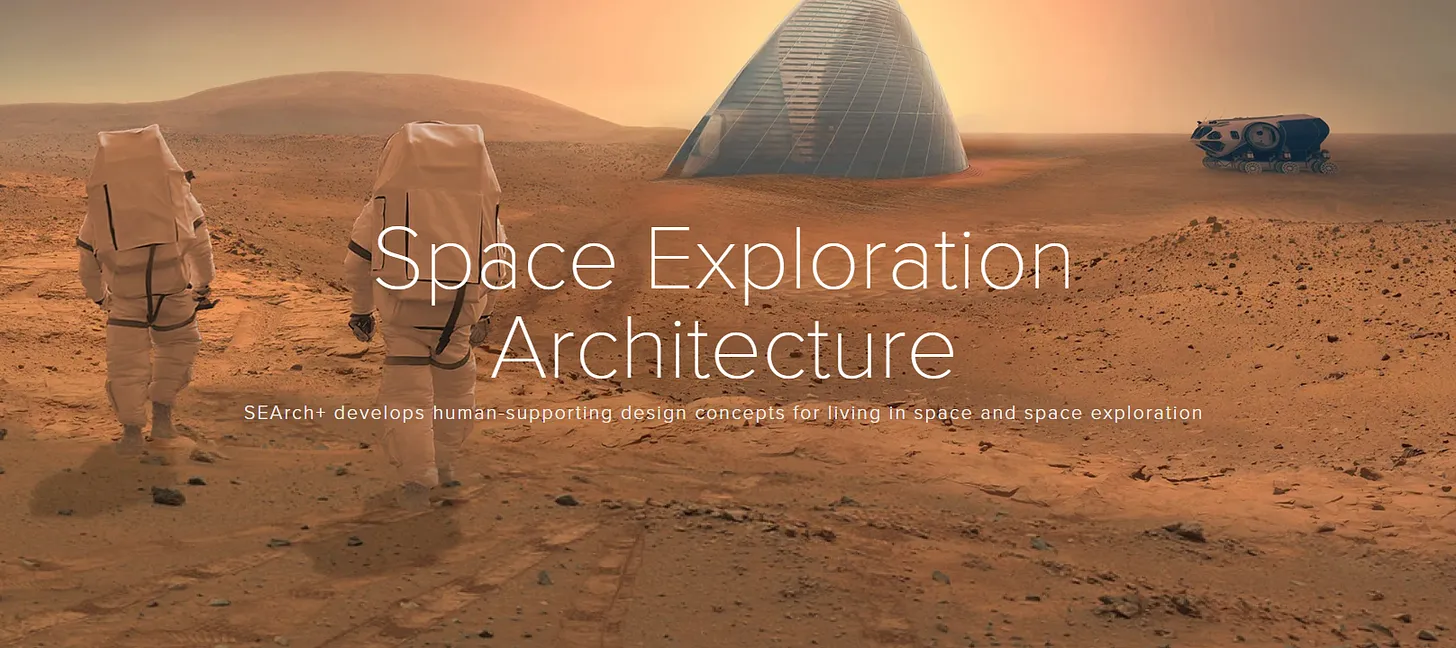 caption
The Interview Breakdown
1. Who is the target market for Michael Morris and SEArch+? Their primary "clients" are government agencies like NASA and private aerospace entities. However, the intellectual output serves a broader market: the scientific community, tech innovators, and terrestrial construction firms looking to adopt Business Process Automation (like 3D printing) and Digital Maturity in extreme environments.
2. How are they scaling so fast? They scale through Intellectual Leverage and Strategic Partnerships. By operating as a lean, expert-led studio that integrates with massive organizations (NASA), they bypass traditional overhead. Their "scale" is measured in the complexity and gravity of the projects they secure, moving across silos to connect planetary science with structural engineering.
3. What is their USP (Unique Selling Proposition)? Functional Necessity over Vanity. In space, if it doesn’t work, people die. Their USP is the ability to synthesize extreme scientific constraints into habitable, human-centric designs. They use a "Beginner’s Mind" to ask "good dumb questions" that experts in silos often overlook, leading to radical innovation.
Where can I read more about the interview?
All of our interviews are now at Voice of Experts, find Michael's here: https://www.voiceofexperts.com/p/the-space-architects-ledger-why-designing
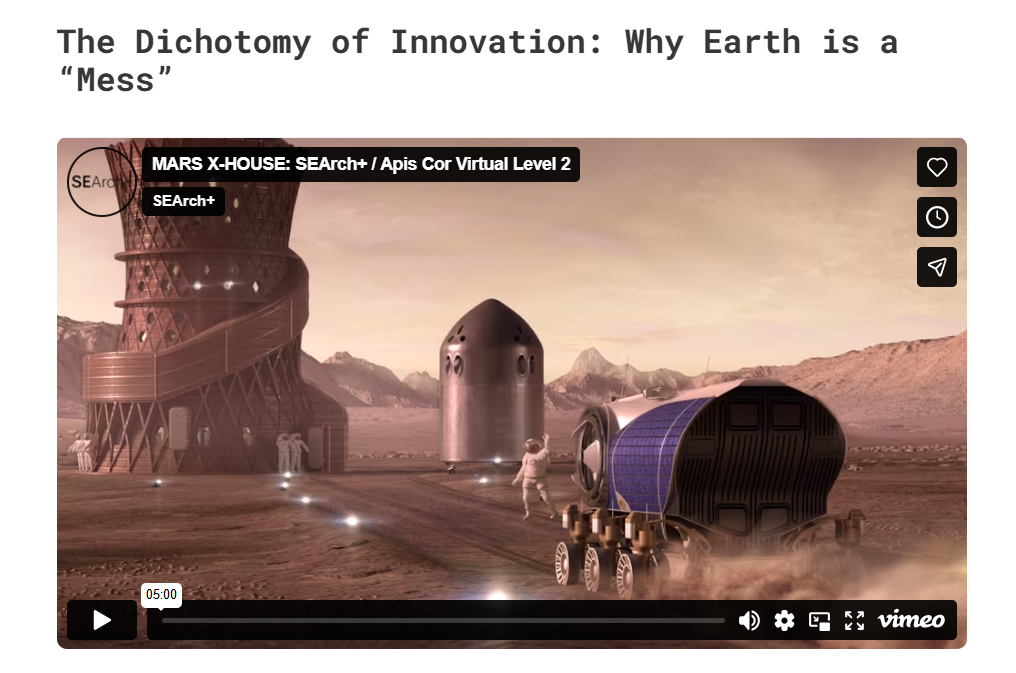
The "Space Mindset" for Digital 2026
From Mars Habitats to Market Leadership
In a world drowning in "content abundance" and "optimization theater," most brands are building on sand. Michael Morris builds on regolith. This case study applies the rigorous principles of Space Architecture to the current digital landscape.
I. The Strategy: Functional Scarcity vs. AI Abundance
The current digital era is defined by a "crisis of abundance." AI can generate 20,000 "intern-level" ideas in seconds, but as Michael noted, this leads to a homogenization where everything looks "sexy" but lacks "gravity."
We must move from SEO (optimizing for bots) to Generative Engine Optimization (GEO). In 2026, the "Space Mindset" means every piece of data must be essential. We don't want more content; we want "Domain-Specific LLMs" that act as the oxygen-loop of your brand’s knowledge, ensuring every AI-generated response is functionally perfect and high-gravity.
II. Digital Transformation: The Legacy of "Earthly Mess"
Michael pointed out that Earth-side design is often plagued by "Profit and Obsolescence" (the printer that always jams). Many companies face this in their Legacy System Modernization. They layer new AI tools over broken foundations.
Implement a Digital Maturity Assessment that mirrors NASA’s TRL (Technology Readiness Levels). Instead of chasing the next "vaporware" tool, we focus on Business Process Automation that solves the "jam." If a marketing tech stack doesn't have 100% functionality, it’s a mission risk.
III. Performance Marketing: The "Closed-Loop" Attribution
In space, every resource is tracked because scarcity is absolute. In marketing, we waste 50% of our budget because we don't know which 50% is working.
Next-Gen Solution: Move toward Data-Driven Attribution Modeling that treats your marketing budget like a Mars mission's fuel supply. We focus on Zero-Party Data Collection—the only "clean" fuel left in a privacy-first world—to power Hyper-personalization Engines. This reduces CAC (Customer Acquisition Cost) by ensuring we aren't "launching" campaigns to audiences that won't survive the funnel.
IV. The "Beginner's Mind" as a Competitive Advantage
Michael’s success comes from being a "scarecrow to inspire technology"—someone who walks into a room of experts and asks the questions they are too "smart" to ask.
Execution: For our clients, Codedesign acts as this "Scarecrow." We use Agentic AI Solutions to monitor cross-departmental silos (Sales, Marketing, Product) and identify the "dots" that aren't being connected. This is Full-Funnel Marketing Orchestration at its most advanced: using AI not just to write copy, but to listen to the gaps in the business strategy.
Conclusion: Writing the "Love Letter to the Future"
Michael Morris doesn't predict the future; he sends it a love letter by building it today. For brands to survive 2026, they must stop looking for "hacks" and start investing in the Gravity of Thought.
At Codedesign, we apply this architectural rigor to your digital presence. We aren't just looking for clicks; we are building the infrastructure for your brand to inhabit the next decade. Whether you're designing for Mars or a global market, the lesson is the same: Refine the question, and the answer will have the weight to stick the landing.

Add comment ×