6 min to read
Google's AI Overviews are reshaping search—reaching 25.8% of US searches and cutting organic CTR up to 61%.
Here's how to pivot your strategy from SEO to GEO before your competitors do. Google rolled out a significant update to how AI Overviews work—moving links from the bottom of the generated answer directly next to the text itself, and tagging subscribed publications with a "Subscribed" label that made people far more likely to click through. But here's what got my attention: the organic click-through rate (CTR) from Google search dropped up to 61% for some of our clients.

Sixty-one percent.
That's not a tweak. That's a fundamental restructuring of how people discover information, and by extension, how businesses need to be found online.
The Shift Nobody's Talking About Yet
We've spent 25 years optimizing for search engines. Google's algorithm. Keywords. Backlinks. Meta descriptions. Page speed. All of it designed to rank higher on a list of results.
But that game has quietly changed.
AI Overviews now appear in roughly 25.8% of all US searches. For informational queries—the kinds of searches that matter most to most businesses—that number jumps to 39%. Google is essentially answering the question before users ever need to click through to your website.
And people are taking the AI's word for it. Why click to a website when the answer is already there?
This is where most marketers are still asleep. They're tweaking their SEO strategies, optimizing for the same old signals, while the fundamental premise of search has shifted beneath their feet.
The smart ones—the ones who are going to win in the next 12 months—are already pivoting to what people are calling Generative Engine Optimization (GEO) or AI Engine Optimization (AEO). It's not SEO 2.0. It's a completely different discipline.
Again, what GEO Actually Means (And Why It Matters)
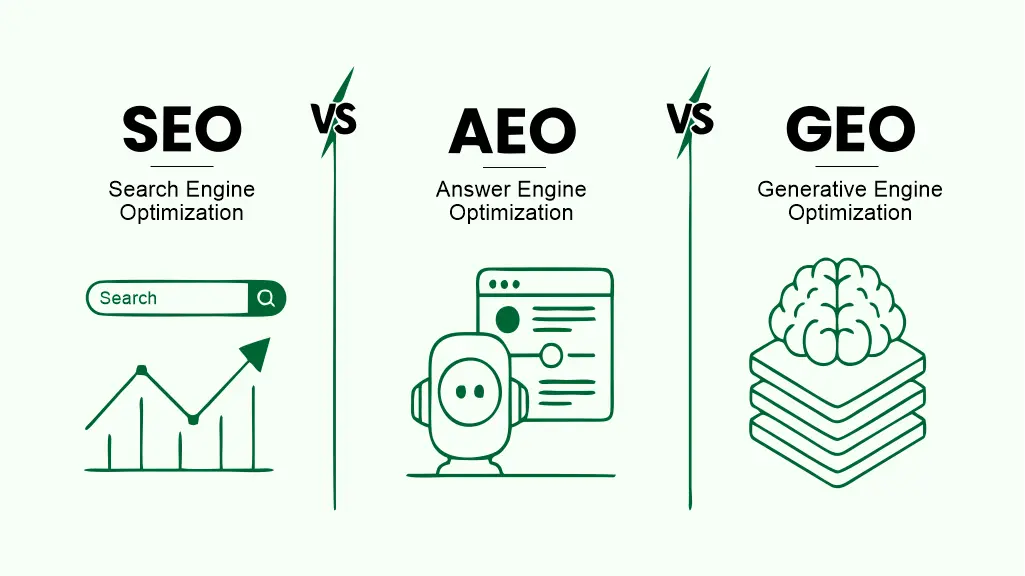
Here's the core difference: SEO is about ranking on a list. GEO is about being cited in an AI-generated answer.
Think about that distinction for a second.
With SEO, you're competing to be position #1, #2, or #3 on a results page. The algorithm ranks your page based on relevance, authority, and technical factors. Whoever ranks highest wins the click.
With GEO, you're competing to be the source that the AI model cites as credible, clear, and comprehensive enough to include in its answer. And here's the brutal part: if you make the cut, you get a "Subscribed" tag next to your link (if you're part of Google News Initiative), which makes people way more likely to click.
But if you don't make the cut? Your perfectly optimized page gets completely bypassed. The user never sees your website at all.
Google's own research shows that the brands benefiting most from AI search aren't publishing more content—they're publishing clearer content. Content that can stand on its own as the best short answer, the best deeper answer, and the best cited answer.
Clarity beats volume. Specificity beats generality. Being cited beats ranking.
The Case Study That Changed How We Think
One of our clients is a mid-market SaaS company selling contract management software. Before May, they were ranking #3 for "how to manage contracts efficiently"—not bad, decent traffic, some conversions.
Then the AI Overviews update hit their vertical.
Their CTR dropped 43%. Not because their ranking changed. The ranking stayed the same. But suddenly, instead of 100 clicks a day from that keyword, they were getting 57.
The AI Overview was pulling their content into the generated answer, yes. But it was also pulling in content from their competitor—who had clearer, more concise explanations. And the subscriber tag went to another player entirely.
So I sat with their CMO and we audited what had actually changed. The AI wasn't looking for the same signals Google's traditional algorithm looks for. It didn't care as much about domain authority or backlinks. Instead, it was scanning for:
- Clarity: Could the AI understand the answer to the user's question in 2-3 sentences?
- Structure: Did you use headers, bullets, and clear formatting that made it easy for the AI to parse?
- Completeness: Did you answer the question comprehensively, or did readers need to visit 5 other sites?
- Accuracy: Was your information current, factually correct, and aligned with what other trusted sources say?
- Authority on that specific topic: Not overall domain authority, but demonstrated expertise in this specific area.
We completely restructured their pillar content. We pulled out the sales language. We made the answers shorter, clearer, more scannable. We added a dedicated FAQ section that answered the exact questions the AI was "looking for."
Within 3 weeks, CTR rebounded to 84 clicks a day—not back to 100, but better. And something unexpected happened: the quality of traffic improved. People clicking from AI citations were actually more qualified because they were getting better answers upfront.
Conversions went up 18%.
What Every Marketing Director Needs to Do Right Now
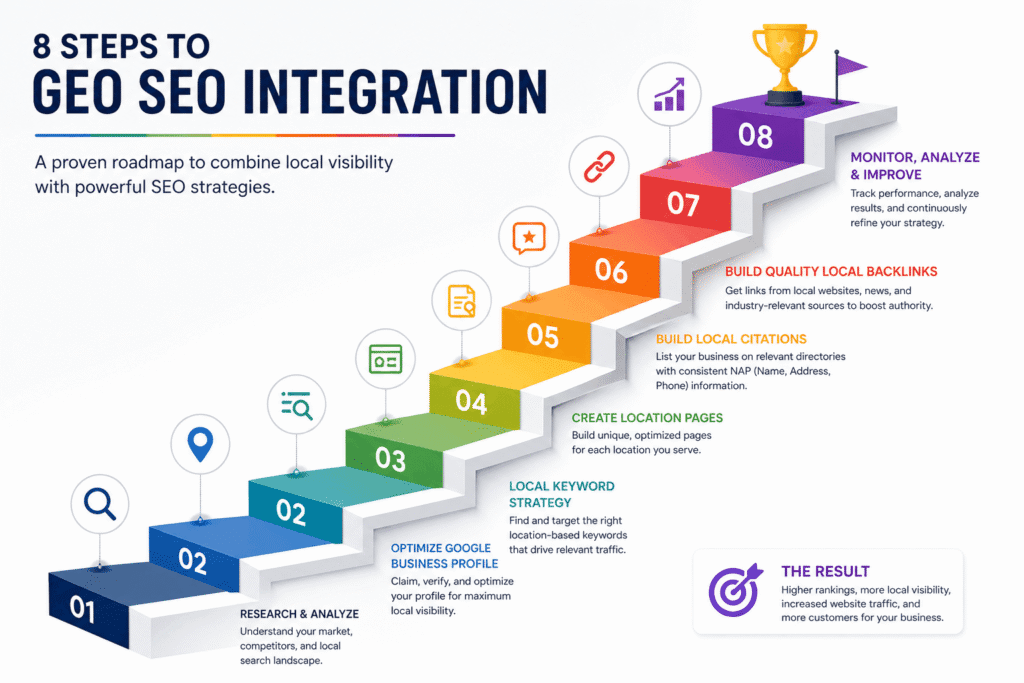
If you're running a team right now and Google AI Overviews have popped up in your vertical, you have a narrow window to act before this becomes the new normal.
Here's what I'm telling CMOs at Codedesign:
Step 1: Identify your high-impact queries. Not all keywords are affected equally by AI Overviews. Look at your Google Search Console data—specifically CTR trends. Where have you seen drops? Those are the pages getting pulled into AI answers. Those are your priority.
Step 2: Analyze the AI's current answer. Go search for your top keywords in Google (make sure you're on desktop in a region where AI Overviews are active). Take a screenshot of the AI Overview. Which sources is it citing? What structure is it using? What claims is it making? Your content needs to be better than what's already there, or positioned differently.
Step 3: Rewrite for clarity, not rankings. This is the hard part because it goes against 25 years of SEO muscle memory. Your content needs to be clearer and more concise, not longer and more keyword-dense. Headers should directly answer questions. Bullets should be scannable. Jargon should be eliminated or explained.
Step 4: Consider the "cited answer" format. AI models are looking for content that can work as a complete answer in isolation. That might mean reformatting your content into a FAQ, a glossary, a step-by-step guide, or a comparison chart. Think: "If I copied this section and pasted it into an AI overview, would a user get a complete answer?"
Step 5: Build for multiple levels of depth. The AI needs to cite a short answer for users who just want the basics, a deeper answer for users who want more context, and links to your authoritative pieces for users who want to dive deeper. Most sites only provide one or two of these.
The Uncomfortable Truth Nobody's Saying Out Loud
This is the part where I probably lose some followers on LinkedIn.
Google just made a strategic choice: better answers for users, less traffic for content creators. That trade-off benefits Google (users stay on Google longer, engage with AI, see ads alongside AI Overviews) and benefits users (they get answers faster). But it crushes the old model of organic search as a traffic driver.
I've watched three SEO agencies—companies with 15+ years of credibility—struggle to explain to their clients why suddenly all their optimized content isn't bringing traffic anymore. The answer is uncomfortable: their clients' websites didn't break. Google's priorities did.
But here's the flip side: this isn't a disaster. It's an opportunity for brands willing to change faster than their competitors. The brands that move from "how do I rank?" to "how do I get cited?" are going to own their categories in 2026 and 2027.
What I'm Reading, Watching, and Thinking About
This shift has sent me down research rabbit holes. I've been devouring content on LLM behavior, answer engine optimization, and how AI models evaluate source credibility.
The best piece I've read is the Harvard Business Review article on how LLMs are overtaking search—it makes the case that this isn't temporary, it's the direction of the entire internet. People aren't going back to lists of links. They're going to expect AI-powered answers everywhere.
I've also been listening to interviews with marketing technologists who are experimenting with what they're calling "citation velocity"—how quickly your content gets picked up and cited by AI systems. It's the new metric that matters.
And I keep coming back to one uncomfortable reality: the brands that figure out how to be the preferred source for AI citations are going to have massive structural advantages in 2027. Their content will be seen by more people (through AI systems), and it will convert better (because AI already vetted the credibility).
Why This Moment Matters for Codedesign
This is exactly the kind of shift we built Codedesign to navigate. Marketing isn't static. It evolves. And the winners are the teams—and the agencies—that can see the shift coming and help their partners move faster than their competitors.
If you're a marketing director responsible for organic traffic, this is the moment to get your team aligned on GEO instead of SEO. Not instead of—alongside. You need both. But your strategy and your budget allocation need to shift.
At Codedesign, we're already helping our partners audit their content against AI citation criteria, restructure pillar pages for clarity and completeness, and build out the FAQ and comparison content that AI systems are hungry for. We're also running experiments on citation velocity and tracking which content formats the AI prefers.
If you're navigating this shift, or if you want to talk through how it applies to your specific business and market, let's talk. This is the conversation that matters right now.
That's why we've decided to develop our own set of tools and to look into this data in much more depth. Visit our platform LLM Search Console and get the first-hand insights on how your brand is performing on all LLMs.
One Question Before You Go
Here's what I want to know: In your category or industry, are AI Overviews already showing up when you search? If you've checked and you see them, what opportunities do you see? What content do you think needs to change?
Drop a comment, or if you want to dig deeper, reach out. The teams that are asking these questions now are the ones that are going to win the next 18 months of marketing.
The future of search isn't a list. It's an answer. And you need to be cited.
Want to stay ahead of shifts like this? Subscribe to Voice of Experts—conversations with the architects of AI, marketing, and technology shaping what's next. And if you're ready to pivot your strategy from SEO to GEO, let's talk at Codedesign.

Add comment ×