7 min to read
I've been in digital marketing long enough to remember when Google AdWords was considered radical. When people thought paying per click was an insane idea. When "search engine optimisation" wasn't even a real phrase. And through every major shift — the rise of mobile, programmatic advertising, social media ads, the death of third-party cookies — there's always been a moment where the industry collectively realises: this time, something is genuinely different.
We're at one of those moments right now. And I think a lot of marketers haven't fully woken up to it yet.
This month, Google made ads inside AI Mode a primary placement. Not a beta. Not an experiment. A primary placement. That sentence alone should stop you in your tracks if you're running any kind of paid search campaign.
Let me break down what this actually means, why it matters more than most industry coverage is giving it credit for, and what I think you need to do about it.
What Is Google AI Mode, Really?
Before we get into the advertising implications, it's worth being precise about what AI Mode actually is — because "Google with AI" is too vague to be useful.
AI Mode is Google's fully conversational search interface. Unlike traditional search, which returns a list of results you scroll through, AI Mode handles complex, multi-step queries through a conversational exchange. You ask a question, it gives you a synthesised answer, you ask a follow-up, it refines. Back and forth, like talking to a very well-informed assistant.
The key word there is synthesised. AI Mode doesn't just surface pages — it reads and processes them, then gives you a constructed answer. Which means the old model of "appear in results → get clicked → convert" gets fundamentally disrupted.
Think about how someone might search for, say, a marketing agency in Lisbon. In the old world, they type that query, see ten blue links, and maybe click yours. In AI Mode, they might have a conversation that goes: "I need help with my e-commerce brand's performance marketing. Who are the best agencies in Portugal with proven track records in Meta and Google?" And AI Mode gives them a synthesised answer — with sponsored listings embedded naturally within that response.
That's a completely different game. And Google has now officially opened that game to advertisers.
The New Ad Formats Inside AI Mode
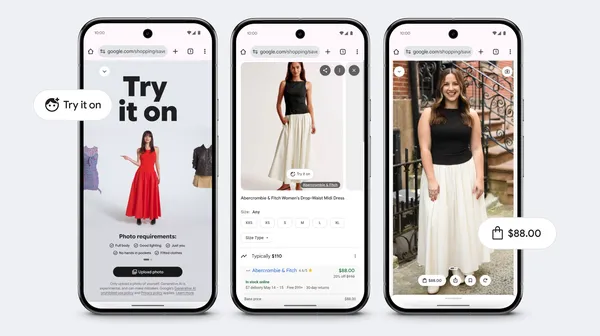
What Google launched this April is genuinely interesting from a technical standpoint. There are two formats worth understanding:
Shopping ads in AI Mode — These surface sponsored retailer listings below organic product recommendations within an AI conversation. So if someone is asking AI Mode to help them choose the best CRM for a small team, and you're running Google Ads for a CRM product, your sponsored listing can appear inline with the AI's recommendations. It's less of an interruption and more of a contribution to the conversation the user is already having.
Direct Offers — This is the one I find most fascinating. It's a monetisation feature that allows brands to present tailored incentives — loyalty perks, bundled pricing, exclusive offers — at the exact point of decision within an AI conversation. Not after the click. At the point of decision. The intent signal is already present. You're not trying to create desire; you're meeting it.
Both formats are clearly labelled as sponsored. Google isn't hiding the ball here. But the integration is designed to feel native to the conversation rather than bolted on.
Why This Is Actually a Bigger Deal Than It Looks
Here's where I want to push back on the relatively muted reaction I'm seeing in the industry.
Most coverage I've read frames this as "Google adapts to AI era." That's technically accurate but misses the strategic depth of what's happening.
The real shift is this: advertising is moving from interruption to integration.
Traditional ads — whether banner ads, pre-roll video, or even classic search ads — operate on an interruption model. You're doing something (reading an article, watching a video, searching for something) and an ad interrupts that activity. The better the ad, the less annoying the interruption. But it's still fundamentally an interruption.
AI Mode ads don't interrupt a conversation. They participate in it. A sponsored listing inside an AI Mode response isn't fighting for attention alongside nine other results — it's contributing to the answer the user is actively constructing. That's a fundamentally different psychological context for the ad impression.
And the intent data backing those impressions is richer than anything keyword targeting has ever given us. When someone is five exchanges deep into a conversation about building out their marketing stack, asking about CRM integration with email platforms and whether they should go enterprise or mid-market, and then your ad appears — that ad impression is carrying an enormous amount of contextual signal. Far more than "they searched for 'CRM software.'"
What This Means for Your Keyword Strategy
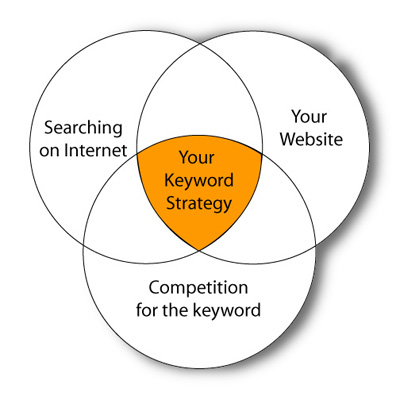
Let me be direct: your existing keyword strategy wasn't built for this, and porting it over unchanged will cost you.
Google has been moving away from exact keyword matching for years — anyone running campaigns knows that match types have become increasingly fluid. But AI Mode takes this further. By January 2026, every major MCC in North America had the option to run keyword-free Search campaigns. You give Google a landing page, a budget, and a target CPA or ROAS. That's it. The AI figures out when and where to show your ad.
That sounds scary to a lot of PPC managers, and I understand why. But here's the reality: if your campaigns have strong first-party data, clean conversion tracking, and well-structured creative — you're better positioned for this world than someone who spent years perfecting a 10,000-keyword structure.
The campaigns that will win in AI Mode environments are the ones where:
- The landing page is genuinely excellent — because the AI will assess contextual relevance, not just keyword density. If your page clearly answers what users are looking for at a deep level, you'll get better placement.
- The conversion tracking is bulletproof — because AI bidding is only as smart as the signal you feed it. Sloppy tracking equals wasted spend.
- The creative adapts to context — because Direct Offers allow dynamic personalisation at the point of intent. Static copy won't perform as well as offers that can flex based on what the user has revealed in their conversation.
The Privacy Angle Nobody Is Talking About Enough
Meta also made a significant move this month that's worth mentioning in this context: their updated privacy policy allows anonymised AI chat signals to inform ad targeting. Without exposing personal conversations, Meta can now understand intent patterns from chat behaviour to make social ads smarter.
This creates an interesting strategic question for brands running cross-channel campaigns. You could, theoretically, be seeing signals from someone's AI chat behaviour informing both their Google AI Mode ad experience and their Meta feed — converging on the same user intent from two different directions.
For performance marketers, this is genuinely useful. For privacy advocates, it's a legitimate concern. I don't think it's inherently sinister — the data is anonymised and aggregated — but I do think brands need to be transparent with their audiences about how they're using intent signals, not because the law necessarily requires it yet, but because trust is a long-term competitive advantage that's worth preserving.
The Budget Reality for 2026

I can't write about AI Mode advertising without acknowledging the elephant in the room: money is tighter this year than many marketers expected.
Forrester found that 52% of marketing executives expect tighter budgets in 2026. Nine in ten ad buyers are concerned about tariff impacts on ad spend. Overall U.S. ad spending is still projected to grow around 9.5%, but a lot of that growth is concentrated in AI infrastructure — not in expanding headcounts or experimental campaigns.
What this means practically is that the shift to AI-driven advertising isn't happening in an expansive, exploratory environment. It's happening in a cost-pressured one. Marketers are being asked to learn new platforms and new formats while also delivering more measurable results with flat or shrinking budgets.
My honest take: this is actually where leaning into AI automation becomes most defensible. If you can get your conversion tracking right and trust Google's AI Max campaigns to optimise toward real business outcomes, you can often get better efficiency than manually managed keyword structures at scale. Not always — there are categories and campaigns where human oversight still outperforms — but the efficiency argument for automation is stronger in a budget-constrained environment.
Three Things I'd Do Right Now
If you're managing Google Ads in any capacity — for your own business or for clients — here's what I'd prioritise this month:
1. Audit your conversion tracking before everything else. This is the foundation of everything. If your tracking has gaps — cross-device, offline conversions, view-through attribution — fix it before you touch anything else. AI bidding is a multiplier: it amplifies good signals and amplifies bad ones equally. Clean data is the prerequisite.
2. Test keyword-free campaigns in a controlled way. Don't switch everything over at once. Pick one or two campaigns with clear conversion goals and sufficient historical data, enable keyword-free targeting, and give it 30 days with proper incrementality measurement. The results will tell you more than any article — including this one.
3. Think about your offer, not just your ad. Direct Offers inside AI Mode are a chance to present genuinely personalised incentives at the point of intent. That requires knowing what incentives actually move people at different stages of consideration. Do you have that mapped out? If not, start there — the creative will follow from the strategy.
Every few years, search advertising forces a reckoning. The shift from broad to exact match forced better targeting. The rise of Quality Score forced better landing pages. The introduction of responsive search ads forced better creative processes. Performance Max forced better data hygiene.
AI Mode is the next reckoning — and it's a bigger one than most that came before, because it doesn't just change how we run ads. It changes the context in which ads exist. Moving from a results page to a conversation is a fundamental shift in the user's relationship to advertising.
Brands that adapt — that understand the conversational intent structure, that invest in first-party data, that create genuine value in their offers rather than just optimisation tricks — will find AI Mode to be an extraordinary opportunity. The intent signal is richer, the format is more integrated, and the path from consideration to conversion is shorter.
Brands that try to port old-world tactics into this new environment will find it frustrating and expensive.
As always with digital marketing: the tools change, but the underlying principle doesn't. Know your customer deeply. Make your offer genuinely valuable. Remove friction from the path to conversion. The platforms come and go. That foundation doesn't.
Bruno Gavino is the founder of codedesign.org, a data-driven digital marketing agency. He writes about performance marketing, analytics, and the evolving digital advertising landscape.
