7 min to read
Hi everyone,
I've been a couple of weeks away from this blog, and that is 2 light years. :)
Last Tuesday I was on a call with a client's VP of Marketing, watching her stare at a Search Console graph that made no sense. Impressions up. Rankings basically unchanged, still sitting at position two and three for her best terms. Clicks down almost 30 percent over six weeks. She asked me the question I've now heard four times this month. "Did we get penalized?"
No. Nobody penalized her. Google just stopped sending her the traffic.
I've had some version of that same call with three other clients since the end of August. A SaaS company. A B2B services firm. A skincare brand I'll get to in a minute. Different industries, same graph. And once I dug into what actually shipped from Google in the last few weeks, the pattern stopped looking like a glitch and started looking like a strategy.
Here's what actually happened, and why I think it's the single most important shift for anyone running marketing over the next quarter.
What changed, specifically
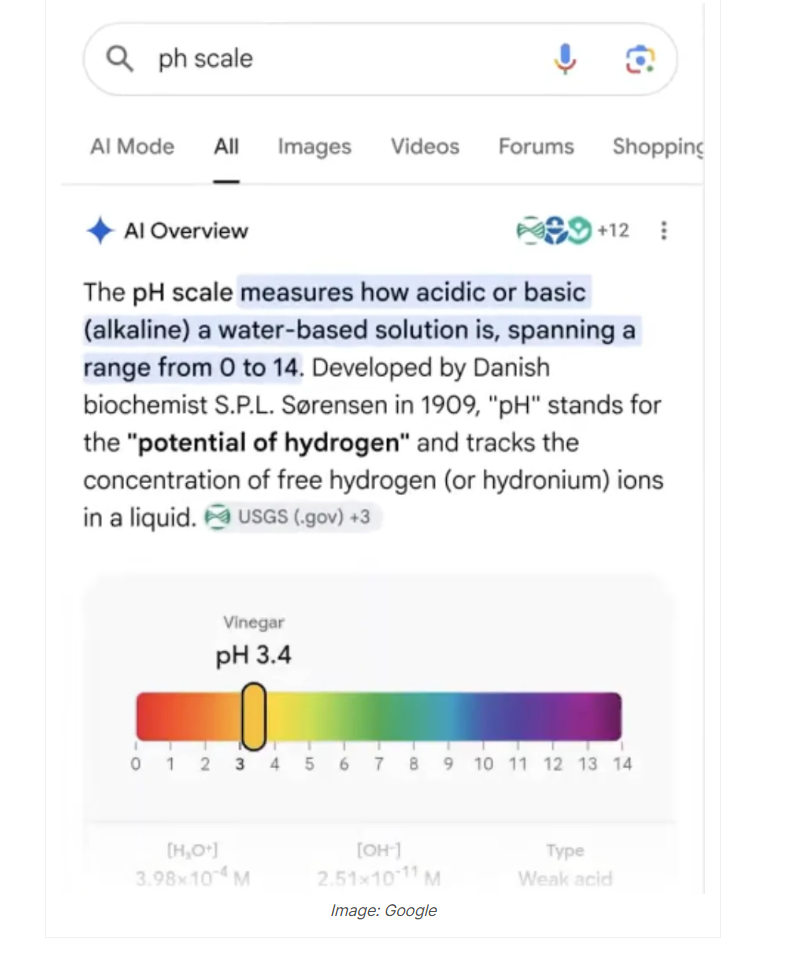
On August 27 and 28, Google confirmed that AI Overviews can now expand automatically into a longer, AI Mode style answer whenever the system decides a fuller response helps the user more. That "Show more" button you used to have to click?
Gone, for a growing slice of queries. Google decides for you how much of the answer to hand over before you ever reach a website.
A few days later, on the 31st, Google rolled generative UI into AI Overviews too. Custom layouts and interactive comparison tools, the stuff that used to live only inside AI Mode, started showing up in regular search results. The same week, Search Console got a global AI visibility report. Users got a toggle to opt out of generative AI features. And Google confirmed AI Overviews now reach more than 2.5 billion monthly users, with AI Mode on its own past a billion.
None of this got announced as a core update. There wasn't one in September, and honestly there didn't need to be. Google reshaped the surface of search itself while half the industry sat around waiting for the next algorithm shake-up to blame.
Why this matters in the next 90 days, not eventually
The numbers are the part that should worry a Marketing Director today, not next year. AI Overviews now show up on roughly 48 percent of tracked queries, up 58 percent year over year. Healthcare, education, and B2B tech queries get hit hardest, but nothing is really exempt anymore.
The click math is the part that actually stings once you sit with it. Sessions that land in AI Mode convert to an external click about 4.5 percent of the time. Traditional search results still convert to a click around 24 percent of the time. That's not a small dip. That's a different business model wearing the same URL.
Layer on top of that an August spam update that pushed 16.71 percent of previously top-10 URLs beyond position 100, an 82 percent jump in ranking volatility over baseline. Add a site-reputation policy change specific to the EEA that's rewriting how third-party and parasite content gets treated. Add Google quietly rolling out goto-redirect links across search results as an anti-abuse measure. And add the Content API for Shopping sunsetting on August 18, with feeds that missed the Merchant API migration starting to throw 410 errors on September 1. Any single one of those would normally be a quarter's worth of SEO news. All four landed inside about three weeks of each other.
If your team is still reporting average position as the headline SEO metric on the Monday dashboard, you're reporting on a game that already changed the rules without telling anyone.
This isn't only an SEO problem
I keep seeing this framed as an SEO story, and that's too small a box for it. If organic sessions are dropping while impressions hold steady, your paid search team is about to feel the squeeze too. Fewer people scrolling past the AI answer means fewer people seeing your ads below it, and I'd expect cost per click on your best converting terms to creep up over the next couple of quarters as competition for that shrinking pool of clickers gets tighter. I'm already seeing early signs of it on two accounts we manage.
Analytics teams have a quieter version of the same problem. A share of your best customers are now doing their research entirely inside an AI answer, forming a preference for your brand, and then converting later through a branded search or a direct visit that your attribution model credits to the wrong channel or to nothing at all. If your dashboards only reward last click or first click, you're going to underinvest in exactly the activity that's currently working, which is getting cited in places your customers already trust. This is the same measurement problem brand marketers have complained about for a decade, except now it's happening inside a search engine instead of outside one.
The prospect story that made this real for me
I'll keep the details anonymized, but the shape of it is worth telling in full. We were involved in a direct-to-consumer skincare pitch of roughly two million dollars a year through Shopify. Solid brand, decent SEO, a product feed that had run fine on autopilot for two years. Their ops team missed the Merchant API migration deadline.
Come September 1, a chunk of their product listings started returning 410 Gone, and Shopping surface visibility for their best sellers quietly collapsed over a weekend nobody was watching. That part was fixable. We had the feed remapped and resubmitted within 72 hours once we caught it.
The more interesting problem was the one underneath it. Even after the feed was fixed, organic sessions for their core queries, things like best retinol serum for sensitive skin, stayed flat instead of recovering to where they'd been in July. We pulled up the AI Overview for that exact query and there they were. Named. Recommended. Sitting right inside the answer. Just not clicked.
The brand was winning the thing that used to matter and losing the thing that actually pays the bills. So we changed what we optimized for. Instead of chasing position, we went after citation. We rebuilt their ingredient and skin-type pages to answer the exact comparison questions people now ask an AI assistant, not the exact keyword phrases people used to type into a search box. We pushed harder on getting the brand named in third-party roundups, dermatologist blogs, and the Reddit threads that these models actually pull from, because we've learned the hard way that on-site content alone doesn't move this needle anymore. And we stopped reporting rankings as the primary KPI to their exec team. We report share of citation now, meaning how often the brand gets named across AI Overviews and AI Mode for its category terms, benchmarked against its three biggest competitors.
Six weeks in, direct and branded search traffic is up 19 percent, even though organic click-through on the informational terms is still down. People are seeing the brand recommended inside the AI answer, closing the tab, and typing the brand name straight into Google or Amazon later. That's the new funnel. It's just invisible in a rankings report, which is exactly why so many teams are missing it.
What I've been listening to and reading that stands out?
I read a TechRound piece on this a few days ago, the one where a handful of SEO specialists are flatly saying citations beat rankings now. The stat that stuck with me is that AI systems pull brand recommendations from third-party sources about 92 percent of the time, not from the brand's own website. If that number is even close to accurate, most companies are optimizing the wrong property entirely. You can have a flawless website and still be invisible in the answer, because the model never reads your homepage. It reads what Forbes, Reddit, and some niche industry blog already said about you.
I also went back through an Exposure Ninja podcast episode on AI search optimization that a friend sent me weeks ago and finally listened to on a flight. One line from it reframed the whole thing for me. Their research found that around 40 percent of the sites showing up inside AI Overviews don't even rank on Google's first page. Read that twice. The old gatekeeping system, the one every SEO agency built its entire pitch around for fifteen years, isn't the only gate anymore. There's a second, parallel path into visibility now, and it runs through digital PR, structured expertise, and simply being quotable, rather than through backlink volume alone.
I also pulled Seth Godin's This Is Marketing off the shelf again this month, mostly out of habit, and one idea in it hit differently this time around. Godin argues that the businesses that win are the ones that become the specific, obvious answer for a specific person's specific problem, not the ones trying to be everything to everyone. I read that years ago as advice about niching down your positioning. Reading it now, it sounds almost like a technical spec for how these AI models pick what to cite. They're not ranking ten blue links anymore. They're picking the one or two sources that answer the question most specifically and confidently. Vague, broad, safe marketing copy has nothing left to hide behind.
And this connects to something I wrote in my own newsletter a couple of months back, the piece asking whether branding matters more in the age of digital slop. My argument then was that as more content gets produced by machines, the premium on being a recognizable, trusted, human source goes up rather than down. I didn't fully grasp how literally true that would become this fast. AI models are, right now, doing exactly what I described. They default to sources that already carry outside credibility and skip the ones that exist only to rank.
What I'd actually do this quarter
Stop treating position as the scoreboard. Pull your Search Console data and look at impressions versus clicks by query, not average rank. If impressions are steady or climbing while clicks are falling, that query has already been absorbed into an AI answer, and no amount of on-page tweaking is going to win the click back.
Go find out where your brand already gets mentioned outside your own site, then go get mentioned in five more places this quarter. A single strong citation in a source these models already trust is worth more right now than another blog post sitting on your own domain talking to itself. Digital PR, founder interviews, comparison roundups, and genuinely useful Reddit or forum answers all count. A press release does not. And, subscribe to LLM Search Console! Its a game changer.
If you run ecommerce and haven't personally verified your Merchant API migration is fully live, do it this week, not this month. A silent 410 error doesn't send you an alert. It just erases you, quietly, while your dashboard keeps showing last month's numbers.
Build one report your executive team actually sees that tracks share of voice inside AI answers for your top ten category terms, even if it's a manual spot check for now using tools like the AI visibility trackers that have popped up this year. In three months every serious analytics platform will have this built in natively. Right now, being early is still worth something, mostly because most of your competitors haven't started measuring it yet.
The uncomfortable truth is that a lot of marketing teams are about to spend the next quarter optimizing harder for a game that's already ending, because the dashboards they've built still reward the old score. The brands that come out ahead won't be the ones producing more content. They'll be the ones other people are already talking about, in places an AI model has learned to trust, before their competitors figure out that's the actual game now.
So here's my real question for you, not a rhetorical one. Have you already seen your own click-through rate quietly drop on queries where your rankings haven't moved at all? Reply and tell me what you're seeing in your own Search Console this week. I'm genuinely trying to figure out how widespread this is outside my own client list, and one honest data point from you is worth more to me right now than another agency report trying to sell you something.
