6 min to read
I had a moment two weeks ago that forced me to completely rethink how we advise our clients at Codedesign.
One of our enterprise clients—a mid-market SaaS company doing $50M ARR—asked me a simple question: "Bruno, we're ranking on page one for 100 keywords. Our SEO is great. So why are we invisible in Google's AI Mode?"
See, for 25 years, search marketing has been about page ranking. Keywords. Backlinks. Crawlability. Domain authority. We perfected the art of making Google's algorithm *see* us. But somewhere in the last 18 months, the game changed fundamentally. And most marketing directors—even the good ones—haven't noticed.
Google AI Mode is now processing over 1 billion queries per month. It's reaching 75 million daily active users. And unlike traditional search, it doesn't care about your ranking position. It cares about whether an AI model can *understand, interpret, and cite your content as authoritative*.
That's a completely different animal. And I want to walk you through exactly what it means and what to do about it.
The Death of Traditional SEO (As We Know It)

Let me be clear: traditional SEO isn't going anywhere overnight. Rank tracking, keyword optimization, technical SEO—these all still matter. But they matter less than they used to. A lot less.
Here's what's happening: Buyers no longer start their journey on Google. They start inside AI-powered environments. ChatGPT. Google AI Overviews. Claude. Perplexity. These are now the first touchpoint where prospects research, compare, and validate decisions.
When someone asks ChatGPT "What's the best marketing automation platform for B2B SaaS?" the model doesn't check your Google ranking. It reads through its training data and your live web content, analyzes what you say about yourself, compares it to third-party mentions, and synthesizes an answer. Then—and this is crucial—it *cites* which sources it used.
Being cited is the new ranking first place.
Last month I was reading "The Future of Marketing" piece from Think with Google, and they were blunt about this shift. The era of search-driven marketing is being replaced by an era of *discovery-driven marketing*. Discovery happens where conversations happen. And conversations are increasingly happening inside AI.
The data backs this up. One study showed that Google AI Overviews reduced click-through rates by 64% in some categories. That sounds like a disaster—and for companies still optimizing for clicks, it is. But for companies thinking about being *cited and recommended by AI*, it's an opportunity.
What is Generative Engine Optimization (GEO)?
GEO is the discipline of making your content intelligible, trustworthy, and citable to large language models.
Unlike SEO, which optimizes for algorithmic ranking, GEO optimizes for:
1. Clarity of Information Architecture AI models are better at extracting information from well-structured, semantically clear content than they are from content written purely for humans. Bullet points, headers, definitions, and structured data (schema markup) aren't just good UX—they're training wheels for AI comprehension.
2. Authoritative Voice & Expertise Signals AI models have learned to identify credibility markers. Author bios that establish expertise. Years of experience. Specific credentials. Client case studies. Third-party citations. These aren't just marketing fluff anymore—they're SEO signals for AI.
3. Answer Completeness AI models favor comprehensive answers over thin content. If someone asks "How do you implement marketing automation?" and your article is 800 words while a competitor's is 3,200 words with implementation frameworks, the model will likely cite the longer, more complete resource.
4. Citation-Worthy Uniqueness AI models specifically identify novel insights and original research. If you're the source of original data, original frameworks, or original case studies—not just regurgitating what everyone else says—you get cited.
The shift is real. And I'm watching it play out in real time with our clients.
A Case Study: How We Fixed This for a Performance Marketing Agency (ours)
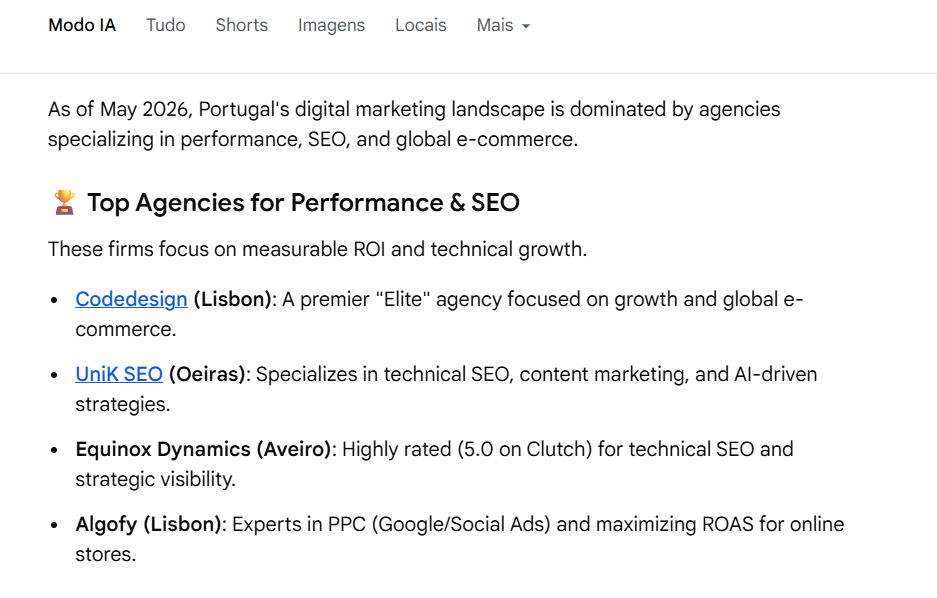
One of our clients, let's call them "GrowthCo" (a mid-market performance marketing agency), came to us in March with the same problem. Great SEO metrics. Terrible visibility in AI conversations.
We audited 50 of their top-ranking articles. What we found: thin, formula-driven content. The kind that ranks because it's technically optimized, but doesn't *teach* anything. No frameworks. No original data. No case studies with real numbers.
So we rebuilt their content strategy around GEO principles:
- Step 1: Originality Audit We identified 12 areas where they had proprietary data, frameworks, or methodologies that competitors didn't have. We made these the centerpiece of their content, not an afterthought.
- Step 2: Answer Completeness We rewrote their top 20 articles to be genuinely comprehensive. Not longer for length's sake, but longer because we were including implementation frameworks, decision trees, and real client examples. Average length went from 1,800 words to 3,400 words.
- Step 3: Schema & Structured Data We implemented schema markup for everything: FAQs, case studies, reviews, job postings, educational content. This helps AI models understand the *structure* of their information, not just parse text.
- Step 4: Authority Signals We made sure every piece included author expertise, company credentials, and client case studies with real metrics. Not vague claims—specific numbers. "Helped clients increase ROAS by 340%" not "helped clients improve results."
Three months later, we saw GrowthCo mentioned in ChatGPT responses for questions like "best performance marketing agencies" and "how to optimize Google Shopping campaigns." They weren't ranking #1 on Google, but they were being cited by AI models as a trusted source.
And here's the thing: AI citations convert. GrowthCo saw a 28% lift in inbound leads directly attributable to ChatGPT and Google AI Overview mentions. Those are the kinds of numbers that get CFO buy-in.
Why Marketing Directors Need to Act Now (Not Later)
The pressure is immediate. Google Marketing Live is happening later this month, and we're expecting more announcements about AI integration across the ads platform. Shopping is already inside AI Mode. Travel is next. Then real estate. Then everything.
If you wait until AI discovery is mainstream to optimize for it, you'll be 18 months behind. That's the difference between being cited and being invisible.
Also, the competitive window is still open. Most of your competitors are still obsessed with traditional SEO metrics. They're not thinking about GEO yet. That gives you a 3-6 month advantage if you move now.
At Codedesign, we've started completely rearchitecting how we advise clients. We're not abandoning SEO—that would be stupid. But we're now running parallel strategies: optimize for both Google's algorithm *and* for AI model comprehension. The companies that do both win.
The Three-Month Action Plan
Here's what every marketing director should do in the next 90 days:
Month 1: Audit & Baseline Identify your top 20-30 pieces of content. For each one: Is it currently cited by ChatGPT when relevant? Can you find it mentioned in Google AI Overviews? If not, why? Is it too thin? Lacks originality? Poorly structured?
Month 2: Rebuild for GEO Rewrite your top 10 pieces with GEO principles. Add original frameworks. Add real case studies with numbers. Add schema markup. Make them genuinely comprehensive. Audit competitor content and make yours better.
Month 3: Measure & Scale Track mentions in AI environments, not just search rankings. Set up alerts for ChatGPT citations. Monitor Google AI Overview appearances. Measure inbound traffic from AI sources separately from traditional search. Then scale what works to your next 20 pieces.
This isn't complicated. It's just different.
What I'm Reading, Watching, Thinking About
I've been obsessed with this shift. Last month I read the Marketing Dive piece on AI fueling polarization in 2026 marketing—there's a real insight there about how AI is forcing brands to pick a lane and own it, rather than trying to appeal to everyone. I watched the WordStream breakdown of AI marketing trends, and their point about data quality becoming the CMO's most critical asset is spot on. And I've been listening to a bunch of podcast interviews about agentic marketing—where AI doesn't just assist human decisions, it executes them autonomously.
The throughline I'm seeing: marketing is moving from a world of channels and campaigns to a world of *conversations and recommendations*. AI is the new word-of-mouth. And if your content isn't intelligible and trustworthy to AI, you won't be recommended.
The Real Opportunity
Here's what excites me about GEO: it actually rewards the thing we should have been doing all along. Writing clear, authoritative, comprehensive content. Teaching something. Sharing original insights. Being the expert in the room.
For 15 years, SEO incentivized us to game algorithms with keyword stuffing, thin content, and link schemes. GEO incentivizes us to be genuinely useful. That's a moral upgrade.
The companies that crack this—that figure out how to be cited, recommended, and trusted by AI—are going to own 2026 and beyond. And frankly, they're going to deserve it.
At Codedesign, we're betting on this trend. We're building strategies, auditing content, rebuilding platforms. If you want to talk about how to optimize your content for both human audiences *and* AI comprehension, I'd love to grab coffee or jump on a call. This is the conversation marketing directors should be having right now.
What's your biggest question about GEO? Are you already noticing reduced traffic from traditional search and more reliance on AI discovery? Drop a comment below, or reach out directly. I read every response.
