5 min to read
Strategy Insights: Orchestrating Intelligence in Global Supply Chains
Based on the recent Voice of Experts session between Bruno Gavino and Benjamin Yuille, the core of the Oi.ai philosophy is shifting from "recording transactions" to "rehearsing decisions". This interview highlights a critical shift in the B2B landscape—moving away from deterministic, spreadsheet-heavy legacy logic toward probabilistic AI that manages capital allocation and risk.
Strategic Analysis of Oi.ai
- Target Market: The sweet spot includes mid-to-large-scale enterprises in Pharmaceuticals/Biopharma, Manufacturing, CPG (Consumer Packaged Goods), and Retail. These are companies managing multi-country complexity where the volume of decisions has become "uncomfortable".
- Unique Selling Proposition (USP): Unlike GenAI that focuses on language, Oi.ai uses Probabilistic AI to improve capital allocation. Their "Goldilocks" product finds the perfect balance between inventory levels, sales risk, and cost of service.
- Scaling Factor: They scale by avoiding the "rip and replace" of ERP systems. Instead, they ingest existing data to create a digital twin. This allows for rapid deployment and immediate identification of "trapped" working capital.
-
Codedesign Synergy: Codedesign can bridge the gap between Oi.ai’s backend intelligence and the front-end digital experience. While Oi.ai optimizes the balance sheet, Codedesign ensures that the resulting supply chain efficiency translates into seamless omnichannel customer experiences and performance marketing stability.
Case Study: From Spreadsheet Chaos to Decision Intelligence
Client Profile: A Multi-Country Retailer & CPG Manufacturer
Vertical: FMCG / E-commerce
1. The Challenge: The "Status Quo" Pain
The client operated across three European borders using 20th-century logic: a sea of Excel spreadsheets and a legacy ERP that functioned as an accounting tool, not a forecasting engine. They suffered from "phantom stockouts" (bare shelves despite inventory being in the system) and locked-up cash in slow-moving stock.
The fundamental problem with legacy global supply chains is that they were built for accounting and control, not for navigating volatility. For a multi-country retailer, we implement a Digital Transformation Roadmap that replaces "Transaction Recording" with "Decision Rehearsal".
-
Legacy System Modernization: Instead of a risky ERP overhaul, we utilize AI to ingest data from existing multi-country spreadsheets and 20th-century ERPs.
-
Digital Adoption Strategy: We shift the internal culture from obsessing over perfect visibility (which is just high-resolution hindsight) to Decision Modeling.
-
Omnichannel Strategy: By creating a "common language" between supply chain, procurement, and finance, we ensure that stock levels in one country can be balanced against demand in another in real-time.
2. Digital Transformation & Strategy (The Roadmap)
We moved the client from Visibility to Decision Modeling.
-
Legacy System Modernization: Rather than a multi-year ERP overhaul, we implemented an "Ingest & Overlay" strategy.
-
Digital Maturity Assessment: We identified that the client was obsessing over "perfect visibility". We pivoted their KPI from "Tracking" to "Regret Reduction"—analyzing if a different decision would have materially changed the outcome.
3. AI & Next-Gen Tech (The Probabilistic Edge)
We deployed Agentic AI Solutions that acted as editors rather than just generators. While the market is distracted by chat bots, the real value for a global firm lies in Probabilistic AI.
-
Agentic AI for Capital Allocation: We deploy agents that don't just "talk" but "decide," focusing on how to deploy capital and manage risk across borders.
-
The Digital Twin Overlay: We spin up a digital twin of the entire multi-country network to identify slow-moving inventory cohorts.
-
Regret Reduction Modeling: Instead of just predicting the future, the system focuses on regret reduction—analyzing past decisions to ensure the next cross-border capital move is optimized for the least likely negative outcome.
-
Scenario Modeling: Using probabilistic AI, we enabled the client to rehearse decisions. If they wanted to drop inventory by 15%, the AI modeled the specific risk range of missing sales in the Portuguese vs. Spanish markets.
-
Predictive Analytics: We moved the client’s forecast accuracy from 92% to 95%. While seemingly small, this 3% gain unlocked millions in trapped working capital.
4. Performance & Growth Marketing (The Revenue Bridge)
Supply chain efficiency is the ultimate "Growth Hack." In a multi-country operation, the supply chain is the marketing engine. If the shelf is bare, the ad spend is wasted.
-
Inventory-Driven ROAS: We integrate supply chain data directly into the growth marketing stack. If a specific country has an inventory surplus, the Performance Marketing engine automatically scales up Lead Generation and B2B Account-Based Marketing (ABM) for those specific SKUs.
-
CAC Reduction through Fulfillment: By utilizing the "Goldilocks" principle—finding the balance between inventory and cost of service—we reduce the cost of customer acquisition by ensuring 100% fulfillment reliability
-
Zero-Party Data Integration: We use AI to analyze why customers in specific regions are experiencing "uncomfortable" decision-making, feeding that data back into the supply chain for better range planning.
-
ROAS Optimization: By integrating supply chain data with Google and Meta Ads, we automatically paused high-spending campaigns for products with high "uncertainty" in the supply chain, reducing wasted ad spend.
-
Hyper-personalization: We used the "Digital Twin" data to drive local SEO and social commerce. If a specific region had a surplus of a "slow-moving cohort," the performance engine triggered localized discounts to clear the balance sheet.
5. Results: The "Goldilocks" Outcome
For a multi-billion dollar company still operating on Excel, the transformation results in:
-
Scenario Compression: The ability to run scenario modeling on safety stock across different regulatory environments and currencies.
-
Working Capital Optimization: Identifying "trapped" capital caused by uncertainty rather than complexity.
-
Regret Reduction: Moving from 92% to 95% forecast accuracy, which, while seemingly a small incremental gain, represents a massive shift in value for a multi-country operation.
-
Working Capital: Reduced "trapped" cash by 18% through scenario compression on safety stock.
-
Operational Harmony: Created a "common language" between Finance, Procurement, and Marketing, moving the tension from technological to purely strategic.
-
Efficiency vs. Effectiveness: The company stopped trying to be "faster at talking" (GenAI) and became "better at deciding" (Probabilistic AI).
Global Biopharmaceuticals (Life-Science Continuity)
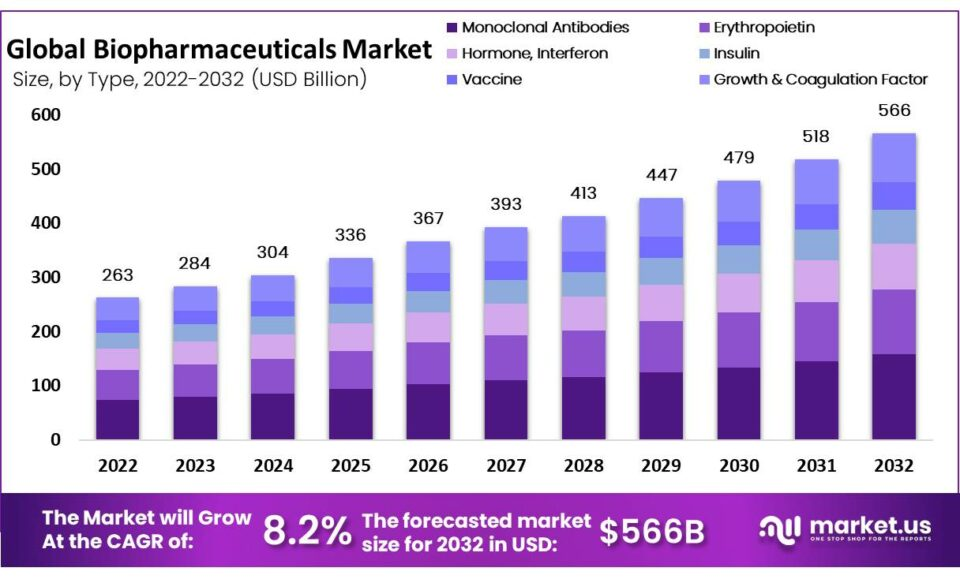
The pharmaceutical supply chain is no longer just a cost center; in 2026, it is a strategic asset where disruptions can have life-or-death consequences.
-
The Complexity: Biologics (vaccines, monoclonal antibodies, and cell therapies) require extreme "cold chain" precision, with logistics already consuming 20%–30% of distribution budgets.
-
The Transformation Need:
-
Agentic AI for Capital Allocation: New pricing regulations, such as the Medicare Drug Price Negotiation Program, have compressed margins by 38%–79%, requiring AI to recalibrate capital across dual-sourcing and safety stock.
-
Blockchain for Integrity: As serialization deadlines cascade through 2026, blockchain is moving from pilot to production to create immutable records, combating counterfeit threats and ensuring end-to-end traceability across 100+ markets.
-
Digital Twins: Virtual models are being used to simulate real-world conditions, allowing companies to predict 80% of low-inventory positions before they occur.
-
Multi-Country Consumer Packaged Goods (CPG)
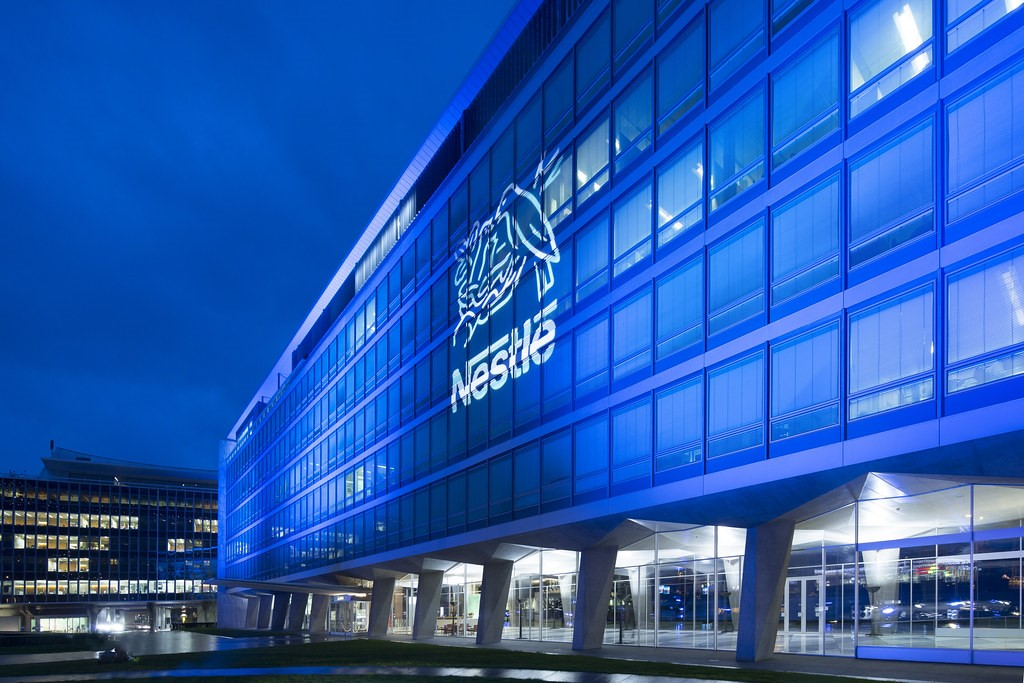
CPG companies in 2026 are facing a "complexity crisis" where fragmented platforms and manual processes are no longer sustainable for global growth.
-
The Complexity: Large manufacturers often manage over 50 stocking locations globally with rigid, linear systems that fail to adapt to modern SKU volatility and geopolitical shifts.
-
The Transformation Need:
-
"Living" Supply Chain Networks: Moving away from static forecasts, manufacturers are integrating IoT and predictive analytics to create networks that sense and adapt like organisms, reducing the need for manual intervention.
-
Multi-Tier Transparency: New regulations (e.g., EU Deforestation Regulation) require visibility beyond tier-one suppliers. Digital transformation is now a "survival imperative" to avoid massive fines and maintain market access.
-
Unified Data Orchestration: Instead of adding more tools, 2026 leaders are focusing on unifying existing systems (ERP, TMS, WMS) into a single source of truth to eliminate "shadow processes" and spreadsheet reliance.
-
In 2026, the competitive divide in global supply chains is no longer defined by who has the most data, but by who can translate that data into decisive action.
As Benjamin Yuille aptly noted, "visibility without decision modeling is just higher resolution hindsight". For multi-country enterprises, the path forward requires moving beyond the "status quo" of manual spreadsheets and embracing a probabilistic framework that prioritizes regret reduction and capital efficiency. By orchestrating intelligence at the intersection of supply chain logistics and performance marketing, Codedesign helps brands transform their operational uncertainty into a measurable, scalable competitive advantage.
